The five Los Angeles freeways with the worst traffic
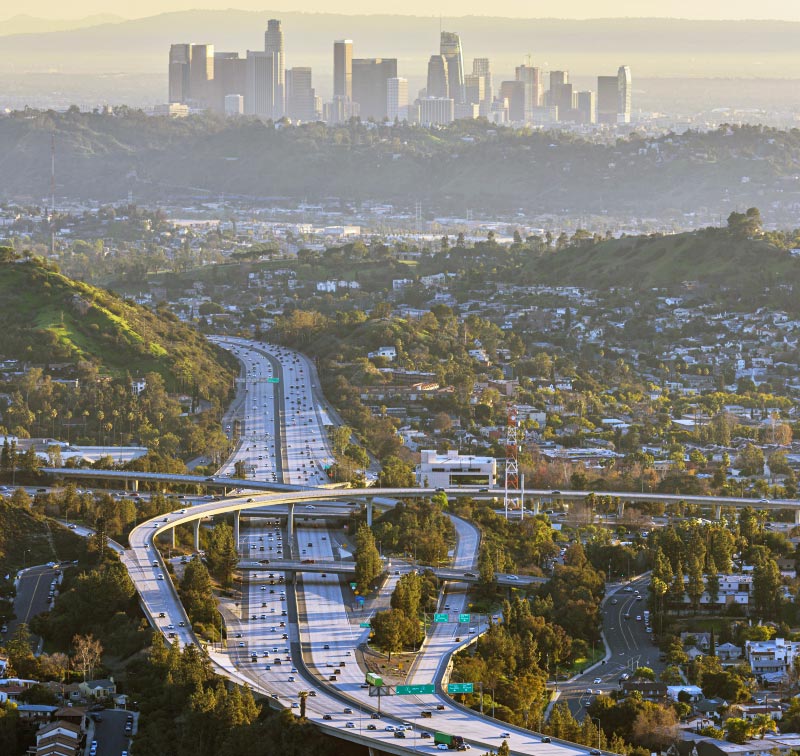
Sunny weather, the beaches, and steady opportunity pull thousands of new residents and visitors to Los Angeles every year. The trade-off is sitting in some of the heaviest traffic in the country. When that many cars share a handful of aging freeways, congestion is not just an inconvenience. It raises the odds of a serious collision. Here are the Los Angeles freeways that consistently rank among the busiest and most frustrating to drive.
The 405 (San Diego Freeway)
The 405 is widely recognized as the most congested highway in California. It runs from Orange County through West Los Angeles and over the Sepulveda Pass into the San Fernando Valley, feeding directly into LAX and several of the region’s busiest interchanges. Volume stays high for most of the day, and the climb through the pass is a near-permanent bottleneck. For a closer look at one of its worst pinch points, see our breakdown of accidents at the 101 and 405 interchange.
The 110 (Harbor Freeway)
The 110 is the oldest freeway in Los Angeles and one of the busiest. Its original Arroyo Seco section, opened in 1940, was among the first urban freeways in the country, and it still shows that age in its narrow lanes and short merge ramps. Traffic runs heaviest through the heart of Downtown and does not ease until past the Pasadena junction.
The 101 (Hollywood Freeway)
Hollywood draws commuters, sightseers, and event traffic at nearly all hours. The 101 absorbs all of it, and a single collision near the Downtown or Hollywood interchanges can throw the entire corridor into gridlock for miles.
The 10 (Santa Monica Freeway)
The 10 between Santa Monica and the East Los Angeles interchange is one of the widest freeways in the region, yet it still backs up daily. Frequent construction and lane reductions, often right in the middle of rush hour, make it one of the least predictable drives in the city.
The 105 (Century Freeway)
The 105 from El Segundo to Norwalk runs heaviest in the late afternoon and early evening, roughly 3 p.m. to 8 p.m. Because it is a primary route to and from LAX, anyone heading to the airport during those hours should plan extra time.
The 210, running east and west between the San Gabriel and San Fernando Valleys, rounds out the list. It moves freely on most weekends but slows to a crawl during the weekday commute.
The most dangerous freeway in Los Angeles: the 710
The 710 did not make the busiest list, but it earns a different kind of attention. Running from Long Beach up toward Pasadena, it combines narrow lanes with extremely heavy truck traffic moving freight in and out of the ports. Caltrans and federal traffic-safety agencies have repeatedly flagged the corridor for a share of truck-involved crashes well above the statewide average. Truck and big rig collisions tend to cause far more serious injuries than ordinary car accidents, which makes the 710 a route to treat with extra caution.
Why Los Angeles freeways are so congested
Several factors feed the region’s reputation for the worst traffic in the country:
- Heavy daily commuter volume from surrounding counties
- Limited public transit relative to the size of the metro area
- Frequent roadwork and lane closures on aging freeways
- Concentrated tourist and entertainment traffic near Downtown and Hollywood
- Slowdowns from concerts, sporting events, and seasonal weather
The same congestion that costs drivers hours also raises crash risk. Stop-and-go conditions are a leading cause of rear-end collisions, and a poorly designed or poorly maintained interchange can turn a routine commute into a dangerous roadway hazard.
What to do if you are injured in a Los Angeles freeway accident
If another driver’s carelessness leaves you injured on the 405, the 110, or any other Los Angeles freeway, you should not have to absorb the medical bills and lost income alone. Document the scene if you safely can, get medical attention promptly, and be careful about giving a recorded statement to the other driver’s insurer before you understand the full extent of your injuries.
When a government agency’s roadway design or maintenance contributed to the crash, the claim can also involve a public entity such as Caltrans, which carries much shorter filing deadlines than a standard claim. Our team handles the full range of California car accident cases, and attorney Erick Novik personally reviews how each crash happened before building a strategy around it.
Frequently asked questions about Los Angeles freeways and traffic
These questions focus on Los Angeles freeways and traffic. For broader questions about car accident claims, settlements, and the personal injury process, visit our homepage.
Which freeway should I avoid during rush hour in Los Angeles?
If possible, avoid the 405, 101, and 10 freeways during peak hours (roughly 7 a.m. to 10 a.m. and 3 p.m. to 7 p.m.). These are the busiest highways in Los Angeles, especially around downtown interchanges, LAX, and Hollywood. Alternate surface routes or side streets can sometimes save time, though delays are common citywide.
Which part of Los Angeles has the worst traffic?
The Westside and Downtown Los Angeles areas are known for having the worst traffic in L.A. The combination of commuters heading to job centers, tourists visiting attractions like Hollywood and Beverly Hills, and the constant flow to and from LAX makes these zones gridlocked during nearly all hours of the day. Major routes like the 405, 10, and 101 freeways often record the worst congestion in Los Angeles during both morning and evening rush hours.
What is the most congested highway in California?
The Interstate 405 (San Diego Freeway) is widely recognized as the most congested highway in California. Stretching from Orange County through Los Angeles to the San Fernando Valley, it handles hundreds of thousands of vehicles daily. The 405 also connects to LAX and several major interchanges, making it a constant hotspot for gridlock and delays.
What is the oldest freeway in Los Angeles?
The Arroyo Seco Parkway (now part of the 110 Harbor Freeway) is the oldest freeway in Los Angeles and one of the first urban freeways in the United States. Completed in 1940, it originally connected Pasadena to Downtown Los Angeles. While it is an important historic route, its narrow lanes and short merge ramps make it one of the most challenging roads for modern drivers.
Which traffic is worse, Los Angeles or New York City?
According to recent traffic studies, Los Angeles generally has worse freeway congestion, while New York City has more localized street grid delays. L.A. drivers spend more time stuck on major highways like the 405, 10, and 101, making the city infamous for the worst freeway traffic in the U.S. NYC congestion tends to affect inner-city roads rather than long stretches of freeway.
What is the widest freeway in Los Angeles?
The Interstate 10 (Santa Monica Freeway) and sections of the 405 are among the widest freeways in Los Angeles, with up to 14 to 16 lanes in certain areas, including carpool and auxiliary lanes. These massive highways handle hundreds of thousands of cars daily, yet even with all those lanes, the busiest freeways in Los Angeles often remain jammed during peak hours.
What is the most dangerous freeway in Los Angeles?
The 710 Freeway between Long Beach and Pasadena is considered one of the most dangerous Los Angeles freeways due to its narrow lanes and heavy truck traffic. Data from Caltrans and the NHTSA shows a higher-than-average percentage of truck-related collisions on this route, making it one to approach with caution.
How can I stay safe while driving on busy Los Angeles freeways?
To stay safer on congested L.A. highways, keep these habits in mind:
- Maintain a safe following distance
- Avoid sudden lane changes
- Keep your phone out of reach to prevent distractions
- Check traffic apps before leaving to plan alternate routes
- Stay patient and alert, especially near merging zones and construction areas
If you are involved in a crash on any Los Angeles freeway, contacting an experienced Los Angeles car accident attorney can help protect your rights and pursue fair compensation.
Why does Los Angeles have such bad traffic?
There are several reasons behind the worst traffic in Los Angeles:
- The city’s sprawling geography and reliance on cars
- Limited public transportation options
- Millions of daily commuters from nearby counties
- Frequent roadwork and construction on major freeways
- Tourist and entertainment traffic near Downtown and Hollywood
All of these factors combined make Los Angeles one of the most congested cities in the nation.
Talk to Erick Novik today
Freeway crashes happen in seconds but can affect your health and finances for years. If you were hurt because another driver, a trucking company, or a public agency failed to act safely, Novik Law Group is ready to help you understand your options. Call (818) 305-6041 for a free case review. There is no fee unless we recover for you.