Injured in a motorcycle accident? We have recovered millions for our clients.
Free Consultation – No Recovery, No Fee!
$1,625,000
Trip & Fall
$1,610,000
Car Accident
$1,250,000
Bus Accident
$1,000,000
Trip & Fall
Motorcycle accidents produce some of the most severe injuries in personal injury practice. Riders have no airbags, no crumple zones, and no metal frame between them and the impact, which means even moderate-speed collisions can produce catastrophic harm. They also face systematic bias from insurance carriers and juries who assume motorcyclists were “asking for it” by being on a bike at all. At Novik Law Group, our California motorcycle accident attorneys understand both the medical realities of motorcycle injuries and the specific California laws, like lane-splitting under CVC §21658.1 and the universal helmet requirement under CVC §27803, that shape every motorcycle case. We take on insurance carriers that try to blame riders for crashes they did not cause, and we pursue full compensation for medical bills, lost wages, pain and suffering, and long-term care. Free consultation. No fee unless we win.
How Novik Law Group Can Help You
or Call (818) 305-6041 now!
Real People. Real Results.
We fight to get the best possible result for you.





$1,625,000
$1,610,000
$1,250,000
$1,225,000
Novik Law Group represents injured motorcyclists and the families of riders killed in collisions throughout California, with case experience across Los Angeles County, the South Bay, Beverly Hills and the Westside, the San Fernando Valley, Orange County, and beyond. California is one of the country’s most active motorcycle states, with more registered motorcycles than any other state and year-round riding weather that keeps bikes on the road every month. With that volume comes risk: California consistently ranks among the worst states in the country for motorcycle fatalities according to National Highway Traffic Safety Administration data, and motorcyclists are roughly 25 to 30 times more likely to die in a crash than vehicle occupants when measured per mile traveled.
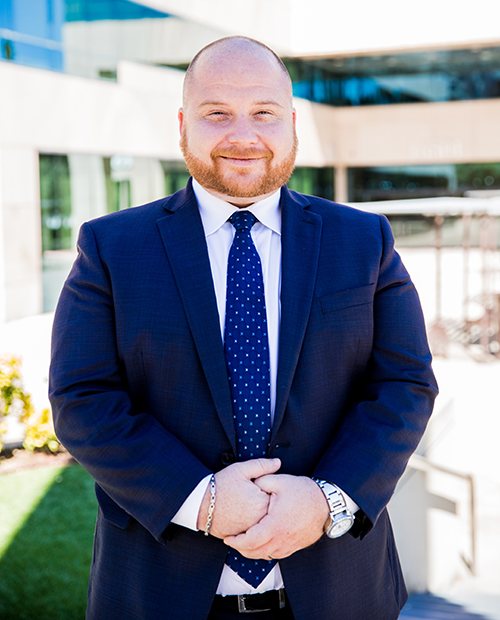
Attorney Erick Novik personally handles serious motorcycle injury cases and brings over a decade of trial experience to every claim. We are a contingency-fee firm. You pay nothing out of pocket. We advance all case costs and only get paid if we recover compensation for you.
California has several motorcycle-specific laws that directly shape liability, damages, and defense strategies in accident cases:
California Vehicle Code §21658.1 formally legalized lane splitting (also called lane filtering or lane sharing) in 2017, making California the only state in the country where the practice is explicitly legal. The California Highway Patrol issued safety guidelines in 2018 establishing reasonable practices, generally recommending lane splitting only when traffic is moving at 50 mph or less and when the motorcycle is moving no more than 15 mph faster than surrounding traffic. Insurance carriers frequently try to argue that any lane splitting equals comparative fault, but California law and CHP guidance do not support that position when the rider was acting reasonably.
California Vehicle Code §27803 requires every motorcycle rider and passenger to wear a US Department of Transportation (DOT) approved helmet. California is one of about 19 states with a universal helmet law (as opposed to states that only require helmets for riders under 18 or 21). The universal requirement matters in accident cases because insurers will try to use any non-compliant helmet (or any allegation that the helmet was improperly fitted) as a basis for reducing damages. California’s comparative negligence rule means a helmet violation does not bar recovery, but it can reduce the head-injury-related portion of damages.
California Vehicle Code §12500 and §12814.6 require a Class M1 or M2 motorcycle endorsement on the driver’s license. Riders without proper endorsement can still recover compensation after a crash; California law does not bar recovery based on licensing status alone, but defendants will try to use it against the rider.
California’s pure comparative negligence rule applies in motorcycle cases as it does in all California personal injury cases. A rider found partially at fault can still recover, with damages reduced by the assigned fault percentage. This matters because insurance carriers routinely inflate the rider’s fault allocation in motorcycle cases. Pushing back on these inflated allocations is one of the most important things experienced motorcycle accident counsel does.
The California statute of limitations is two years from the date of injury for most motorcycle accident claims under California Code of Civil Procedure §335.1. Claims involving Caltrans or other government entities require a notice of claim within six months under the California Government Claims Act.
Client Testimonials




The vast majority of California motorcycle accidents trace to a predictable set of driver behaviors that put riders at risk:
Motorcycle crashes happen everywhere in California, but certain corridors concentrate risk because of traffic volume, road geometry, or rider behavior patterns:
The location of the crash matters in motorcycle cases because road geometry, traffic conditions, and applicable regulations all shape liability. A crash on a curvy mountain road raises different questions than a freeway lane-change crash, and a crash involving a Caltrans-maintained road defect opens up a government entity claim that requires fast action under the Government Claims Act.
Liability in California motorcycle accidents often extends beyond just the driver who struck the rider:
Identifying every liable party matters because it increases available insurance coverage. A motorcyclist struck by an underinsured driver on a roadway with known design defects may have access to the driver’s policy AND a Caltrans claim, which substantially expands the recovery potential.
100% FREE CONSULTATION
If you’ve been injured or lost a loved one due to another’s negligence, our team of experienced personal injury lawyers will fight to ensure you receive the compensation you deserve.
No cost consultation.
Please call us today and let us help you.
You don’t pay unless we win.
NOVIK LAW GROUP
A Professional Corporation
16830 Ventura Boulevard, Suite 401, Encino, CA 91436
Phone: (818) 305-6041
NOVIK LAW GROUP
A Professional Corporation
500 S. Sepulveda Blvd., Suite 523, Los Angeles, CA 90049
Phone: (213) 992-9233
NOVIK LAW GROUP
A Professional Corporation
7700 Irvine Center Dr., Suite 800, Irvine, CA 92618
Phone: (949) 800-5922
Motorcycle injuries are typically more severe than typical car accident injuries. Common motorcycle accident injuries include:
Recoverable damages typically include past and future medical bills, future care costs for catastrophic injuries, lost wages, loss of future earning capacity, pain and suffering, disfigurement, property damage to the motorcycle and gear, and punitive damages when the defendant’s conduct warrants it. Motorcycle accident damages tend to be higher than typical car accident damages because the injuries tend to be more severe, but this also means insurance carriers fight harder against motorcycle claims. Strong legal representation is essential.

The questions below address issues specific to California motorcycle accident claims. For broader personal injury questions about damages, deadlines, and the claims process generally, see the FAQ section on our homepage. For questions about your specific situation, call Novik Law Group at (818) 305-6041 for a free, no-obligation consultation.
Yes, and addressing it head-on is one of the key things experienced motorcycle accident counsel does. Insurance carriers, defense attorneys, and even juries often start with the assumption that motorcyclists are reckless thrill-seekers who “knew the risks” when they got on a bike. This bias produces inflated comparative fault allocations against riders, lowball settlement offers, and aggressive defense tactics. The legal reality is different: California law treats motorcyclists as equal road users with the same rights and protections as drivers of any other vehicle. Most California motorcyclists are conscientious commuters who practice defensive riding precisely because they understand the consequences of a crash. Effective motorcycle accident representation systematically dismantles the bias narrative through evidence, expert testimony, and trial preparation.
Yes, lane splitting is explicitly legal in California under Vehicle Code §21658.1, enacted in 2017. California is the only state where the practice is formally legalized. The California Highway Patrol’s 2018 guidelines recommend lane splitting only when traffic is moving at 50 mph or less and when the motorcycle is moving no more than 15 mph faster than surrounding traffic. Insurance carriers frequently try to argue that lane splitting equals comparative fault, but that argument fails when the rider was following CHP guidelines and acting reasonably. Lane splitting does not, by itself, make a rider responsible for a crash. The driver who failed to check before changing lanes, opened a door into the lane-splitting path, or intentionally blocked the rider remains primarily liable.
California has a universal motorcycle helmet law under Vehicle Code §27803. Every rider and every passenger is required to wear a DOT-approved helmet that meets federal safety standards. If you were not wearing a helmet, or were wearing a non-compliant helmet, you can still recover compensation for your injuries. California’s pure comparative negligence rule means the violation does not bar recovery. However, defense attorneys will try to argue that the lack of a helmet contributed to head injuries specifically, which can reduce the head-injury-related portion of damages. The same logic does not apply to other injuries: a broken leg or road rash is not affected by helmet status. Experienced counsel can address the helmet defense by limiting its scope and challenging causation arguments where appropriate.
The “I didn’t see them” defense is the single most common explanation drivers give after motorcycle crashes, and it almost always fails as a legal defense. California Vehicle Code requires drivers to look carefully before turning, changing lanes, merging, opening doors, or maneuvering in traffic. Failure to see a motorcycle that was legally on the road is itself negligence, not an excuse for negligence. Modern accident reconstruction can establish the motorcycle’s visibility, speed, and position relative to the driver’s line of sight, frequently demonstrating that the rider was clearly visible if the driver had been paying attention. The bigger problem the “didn’t see them” defense creates is that it signals the driver was likely distracted (phone, navigation system, conversation, fatigue), which can support both basic negligence and, in some cases, punitive damages claims.
There is no meaningful “average” because case values depend entirely on the specific facts: severity and permanence of injuries, total medical costs (past and future), lost wages and reduced earning capacity, pain and suffering, available insurance coverage, and the strength of the liability evidence. Motorcycle cases tend to produce higher recoveries than typical car accident cases because the injuries tend to be more severe. Cases involving traumatic brain injuries, spinal cord injuries with paralysis, multiple fractures, amputations, or wrongful death routinely produce six-figure to seven-figure recoveries when properly developed. Beware of websites or attorneys that quote a specific “average” without knowing your case facts. A free case evaluation provides a much more meaningful estimate.
Uninsured Motorist (UM) and Underinsured Motorist (UIM) coverage on your own auto or motorcycle policy typically becomes the primary path to recovery when the at-fault driver carries no insurance, fled the scene as a hit-and-run, or carries inadequate coverage to compensate for serious injuries. California requires insurance carriers to offer UM and UIM coverage but does not require drivers to purchase it: many riders waive UM coverage to save money and discover too late that they have no protection. If you do carry UM/UIM coverage, it functions like the at-fault driver’s policy, paying for your medical bills, lost wages, pain and suffering, and motorcycle damage. Hit-and-run motorcycle accidents also trigger a criminal investigation under California Vehicle Code §20001 (a felony when injuries are involved), which can produce additional evidence for the civil claim.
Most health insurance policies cover injuries from motorcycle accidents, but coverage details vary significantly by policy. Some policies have motorcycle exclusions or limitations on coverage for high-risk activities. Some policies will pay your medical bills upfront but assert a lien on your eventual settlement to recover those payments. Some policies will deny coverage and require you to use the at-fault driver’s insurance. Understanding the interaction between health insurance, the at-fault driver’s auto policy, your own auto policy’s medical payments coverage, and your UM/UIM coverage is critical to maximizing your recovery. An experienced motorcycle accident attorney can navigate these overlapping coverage sources and structure your case to minimize what you ultimately pay out of your settlement.
Yes. California law allows recovery for psychological injuries arising from a motorcycle accident, including post-traumatic stress disorder, anxiety, depression, sleep disorders, and loss of enjoyment of life. Psychological injuries are real, treatable medical conditions that affect quality of life and earning capacity, and California courts treat them as compensable damages. Documentation matters: psychological injury claims require treatment records from licensed mental health professionals, testimony about the impact on daily life, and often expert medical testimony about prognosis and treatment costs. Motorcycle accident PTSD can affect not just the rider but also family members who witnessed the crash or its aftermath. Discussing psychological symptoms openly with your attorney and your medical providers is critical to building a complete damages claim.
Motorcycle accidents produce some of the most severe injuries and the most contested liability disputes in personal injury practice. Insurance carriers know that motorcyclists face systematic bias, and they exploit it to push lowball settlements on injured riders. If you or a loved one has been injured in a motorcycle crash anywhere in California, the most important step you can take is contacting an experienced California motorcycle accident attorney before talking to insurance adjusters, giving recorded statements, or signing any documents. Novik Law Group has spent over 12 years handling complex motorcycle injury and wrongful death cases throughout California. Attorney Erick Novik personally handles serious motorcycle injury cases. Call us today at (818) 305-6041 for a free, no-obligation case evaluation. We work on contingency. You pay nothing unless we recover compensation for you.