Injured in a car accident in Los Angeles? We have recovered millions for our clients.

Free Consultation – No Recovery, No Fee!

$1,625,000

Trip & Fall

$1,610,000

Car Accident

$1,250,000

Bus Accident

$1,000,000

Trip & Fall

Erick B. Novik, Esq.

California Auto Accident Lawyer

Representing California Drivers, Passengers, and Pedestrians Injured in Vehicle Collisions

When you have been injured in a car or auto accident in California, the law firm you choose shapes everything that follows: how quickly evidence gets preserved, how aggressively your insurance claim is pursued, and how much compensation you ultimately recover. At Novik Law Group, our California auto accident attorneys handle the full range of vehicle collision cases, from rear-end fender benders to catastrophic multi-vehicle freeway crashes and fatal collisions. We take on insurance carriers, commercial defendants, and government entities, building each case with the evidence and California-specific legal experience required to win. We work on contingency. You pay nothing unless we recover compensation for you.

How Novik Law Group Can Help You

or Call (818) 305-6041 now!

Don’t Pay Any Fees Unless You Win!

Real People. Real Results.

We fight to get the best possible result for you.

Don't just take out word for it - let our results speak for themselves.
Trip & Fall Accident

$1,625,000

Rear-End Collision By Commercial Vehicle

$1,610,000

LACMTA Metro Bus Accident

$1,250,000

Automobile Collision With Minor Property Damage

$1,225,000

Our California Auto Accident Practice

Your Advocates For Justice

Novik Law Group represents injured drivers, passengers, motorcyclists, pedestrians, and bicyclists in vehicle collisions throughout California, with case experience spanning Los Angeles County, the San Fernando Valley, the South Bay, the Antelope Valley, Orange County, and beyond. Attorney Erick Novik personally handles serious injury cases and brings over a decade of trial experience to every claim. We are not a high-volume settlement mill: we prepare every case as if it is going to trial, which is what produces the leverage to negotiate full settlements from insurance carriers who treat trial-ready firms differently than firms that consistently take quick offers.

California auto accident law is more complex than most people realize. California’s pure comparative negligence rule, the two-year statute of limitations, the six-month notice deadline for claims against government entities, the state’s distinct rules on uninsured and underinsured motorist coverage, and the intersection of state vehicle code with federal commercial vehicle regulations all affect the recoverable damages and the strategy for pursuing them. Our practice is built around this body of California law, and we apply it to every case from initial investigation through final resolution.

Client Testimonials

Nicole Jacobs
Nicole Jacobs
Google Review
It was a pleasure having Mr. Novik as my attorney he came highly recommended. He was always very courteous and very professional. I will be recommending his services to all of my family and friends.
Rebecca Perez-Rodriguez
Google Review
My case was referred to Novik Law Group once the case went into litigation. Mr. Novik always assured me that he would not settle until he got us the best compensation possible. I am happy with our settlement & appreciate the time & effort they put into my case. Thank you!
Yoni Weinberg
Yoni Weinberg
Google Review
Erick is an excellent attorney, but even more importantly, he's an excellent person. If you're his client, you're in good hands.
Tami Pearsall
Tami Pearsall
Google Review
I was involved in a freeway collision that resulted in my requiring surgery and time off work. If you ever find yourself needing representation, Erick knows the law, will give you the best representation, and yet is a compassionate attorney that cares about his clients' well-being.
Benjamin Smith
Benjamin Smith
Google Review
Erick is an excellent and hard working attorney. He’s transparent, compassionate and tough when he needs to be to get the job done. He has my full enforcement as a lawyer and i have and will continue to refer people to him!
Claudia Friday
Claudia FridayGoogle Review
Mr.Novik was extremely professional. He explained and guided me through the whole process with my car accident. Whenever I reached out with questions he responded quickly.

Types of California Auto Accident Cases We Handle

Our California auto accident practice covers every category of vehicle collision case. Each category has distinct evidence requirements, liability theories, and insurance considerations:

  • Truck and big rig accidents: Collisions involving 18-wheelers, semi-trucks, big rigs, delivery vehicles, and other commercial vehicles, often governed by federal Motor Carrier Safety Administration regulations.
  • Motorcycle accidents: Crashes involving riders, often producing catastrophic injuries given the lack of vehicle protection.
  • Pedestrian accidents: Crashes involving pedestrians at intersections, crosswalks, parking lots, and along surface streets.
  • Bicycle accidents: Collisions between vehicles and cyclists, including dooring incidents and right-hook crashes.
  • Bus accidents: Crashes involving public transit, school buses, charter buses, and tour buses.
  • Rear-end collisions: One of the most common crash types, frequently involving whiplash and soft-tissue injuries.
  • Rideshare accidents including Uber and Lyft: Crashes with distinct insurance structures depending on driver app status.
  • Jackknife accidents: When a tractor-trailer’s trailer swings perpendicular to the cab, often sweeping multiple vehicles into the crash.
  • Underride accidents: When a passenger vehicle slides under the side or rear of a trailer, often causing devastating roof-shear injuries.
  • Fatigued and drowsy driver crashes: Including commercial drivers operating beyond federal hours-of-service limits.
  • Caltrans negligence and dangerous roadway claims: When a defective roadway condition contributed to the crash, including poor signage, missing guardrails, or unsafe construction.
  • Metro Micro and rideshare-style transit accidents: LA Metro’s on-demand transit service has distinct liability and insurance considerations.
  • Hit-and-run accidents: When the at-fault driver flees the scene, Uninsured Motorist coverage typically becomes the primary path to recovery.
  • Drunk driving and DUI accidents: Crashes involving intoxicated drivers, which may support punitive damages claims in addition to compensatory damages.
  • Distracted driving accidents: Crashes caused by cell phone use, texting, or other driver inattention.
  • Multi-vehicle pileups: Chain-reaction crashes on California freeways that involve multiple liable drivers and complex insurance allocation.

If your collision involves more than one of these categories (for example, a fatigued commercial driver causing a multi-vehicle pileup on a Caltrans construction zone), the case theory builds across all relevant practice areas. Identifying every applicable angle is what increases available insurance coverage and produces full compensation.

What to Do After an Auto Accident in California

The actions you take in the hours and days after a California auto accident significantly affect your claim. The basic checklist:

  1. Get to safety and call 911. Request a police report even if injuries seem minor. The official report is foundational evidence.
  2. Document the scene. Photograph all vehicle damage, the position of vehicles, road conditions, traffic signals, license plates, and any visible identifiers on commercial vehicles (USDOT numbers, company markings).
  3. Exchange information with all drivers involved: name, contact, insurance carrier, policy number, and driver’s license number.
  4. Collect witness information before witnesses leave. Names, phone numbers, and brief statements of what they saw.
  5. Seek medical care promptly, even if you feel uninjured. Many serious injuries (whiplash, concussion, soft-tissue damage, internal bleeding) take 24 to 72 hours to produce symptoms.
  6. Report the accident to your insurance company, but do not give a recorded statement and do not accept fault. Stick to basic factual information about when and where the accident occurred.
  7. Report the accident to the California DMV within 10 days if it involved injury, death, or more than $1,000 in property damage. This is required under California Vehicle Code §16000.
  8. Contact a California auto accident attorney before giving any recorded statement to an insurance adjuster (yours or the other driver’s), before signing any document related to the accident, and before accepting any settlement offer.

What NOT to do: do not apologize at the scene (insurers interpret this as an admission of fault), do not minimize your injuries to a police officer or insurance adjuster (this becomes evidence later), do not post about the accident on social media (insurers actively monitor this), and do not accept the first settlement offer without legal review.

Our Locations

NOVIK LAW GROUP
A Professional Corporation
16830 Ventura Boulevard, Suite 401, Encino, CA 91436
Phone: (818) 305-6041

NOVIK LAW GROUP
A Professional Corporation
500 S. Sepulveda Blvd., Suite 523, Los Angeles, CA 90049
Phone: (213) 992-9233

NOVIK LAW GROUP
A Professional Corporation
7700 Irvine Center Dr., Suite 800, Irvine, CA 92618
Phone: (949) 800-5922

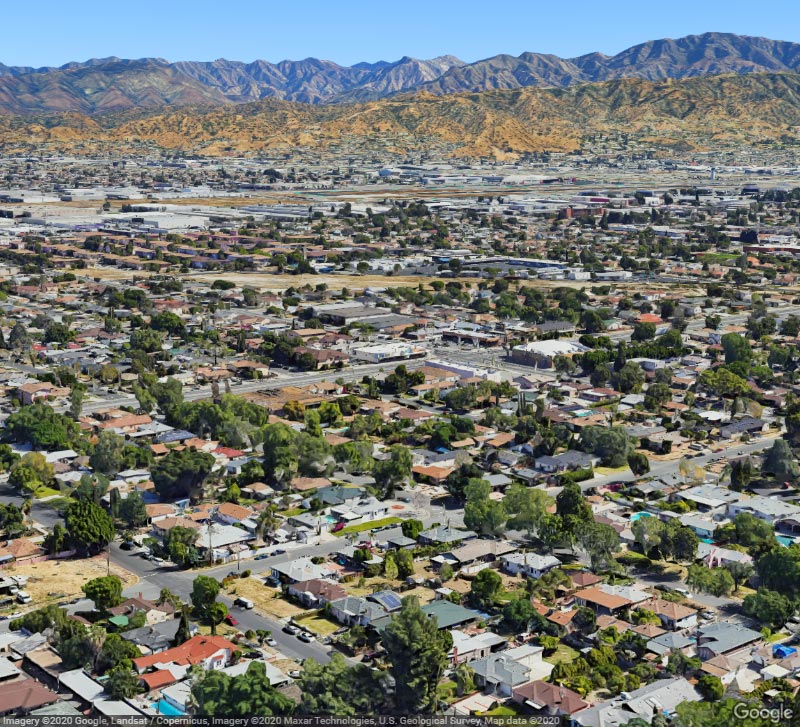
North Hollywood, Los Angeles

California Laws That Shape Your Auto Accident Claim

California auto accident law has several features that often surprise people who are not familiar with the state’s specific rules:

California is a fault state, not a no-fault state. Some states require accident victims to first pursue their own insurance regardless of who caused the crash. California does not. The at-fault driver and their insurance carrier are responsible for the injured party’s medical bills, lost wages, vehicle damage, and pain and suffering. This is a foundational difference that affects how claims are structured.

California follows a pure comparative negligence rule. Even if you are partially at fault for the accident, you can still recover compensation. Your recovery is reduced by your percentage of fault, but there is no minimum threshold that bars recovery. If you were 30 percent at fault and the other driver was 70 percent at fault, you can recover 70 percent of your damages. This is more favorable to injured parties than the rules in many other states.

California’s statute of limitations is two years from the date of injury for most auto accident claims under California Code of Civil Procedure §335.1. Claims involving government entities (Caltrans, city, county, or state-operated vehicles) require a notice of claim within six months under the California Government Claims Act. Missing these deadlines typically bars recovery permanently.

California requires minimum liability insurance of $30,000 per person and $60,000 per accident for bodily injury, plus $15,000 for property damage. These minimums are low, which means many at-fault drivers carry insufficient coverage to fully compensate severely injured parties. This is where Uninsured Motorist (UM) and Underinsured Motorist (UIM) coverage on your own policy becomes critical.

California Vehicle Code §20001 makes leaving the scene of an injury accident a felony. Hit-and-run cases carry significant criminal penalties for the fleeing driver, and the criminal investigation can produce valuable evidence for the civil personal injury claim.

or Call (818) 305-6041 now!

Common Causes of Auto Accidents in California

California auto accidents typically trace to a small set of preventable causes:

  • Distracted driving, including cell phone use, texting, and in-vehicle infotainment systems. California Vehicle Code §23123 prohibits handheld phone use while driving.
  • Speeding and aggressive driving, particularly on California freeways where speeds frequently exceed posted limits.
  • Driving under the influence of alcohol or drugs. DUI crashes often support punitive damages claims and may produce criminal restitution in addition to civil recovery.
  • Running red lights and stop signs, a leading cause of T-bone collisions at California intersections.
  • Following too closely, the most common cause of rear-end collisions.
  • Unsafe lane changes, particularly during heavy freeway traffic.
  • Fatigued driving, particularly among commercial drivers and night-shift workers.
  • Inexperienced drivers, including teen drivers and out-of-state drivers unfamiliar with California freeway interchanges.
  • Dangerous roadway conditions, including poor signage, defective road design, missing guardrails, and unsafe construction zones managed by Caltrans or local agencies.
  • Vehicle defects, including tire failures, brake defects, and airbag malfunctions. These cases support product liability claims against vehicle and component manufacturers.

Establishing the cause of the crash is the first step in proving liability. Police reports, scene photographs, witness statements, vehicle damage analysis, and accident reconstruction expert testimony all contribute to building a clear picture of what happened and why.

Car Accident Lawyer in Woodland Hills

Frequently Asked Questions About California Auto Accident Claims

The questions below address issues specific to auto accident claims in California. For broader personal injury questions about damages, statute of limitations, costs, and the claims process generally, see the FAQ section on our homepage. For questions about your specific situation, contact Novik Law Group at (818) 305-6041 for a free, no-obligation consultation.

Fault in a California car accident is determined by the totality of the evidence: the police report and officer’s narrative, photographs of vehicle damage and the scene, witness statements, traffic camera footage if available, accident reconstruction analysis, and the California Vehicle Code violations involved. Insurance adjusters often assign fault percentages based on internal review of this evidence. When the parties disagree, fault is ultimately determined by a jury at trial. California’s pure comparative negligence rule means more than one driver can share fault: a typical case may end with the at-fault driver assigned 80 percent fault and the injured driver assigned 20 percent fault, with recovery reduced accordingly. An experienced attorney can push back on inflated fault allocations that insurance carriers try to assign to injured parties.

No. California is a fault state, not a no-fault state. This means the at-fault driver (and their insurance carrier) is responsible for the injured party’s damages, including medical bills, lost wages, vehicle damage, and pain and suffering. In no-fault states like Florida and Michigan, drivers must first pursue their own personal injury protection insurance regardless of who caused the crash, with limited rights to sue the at-fault driver. California’s fault-based system gives injured parties more direct paths to recovery against the responsible driver and allows for full compensation including pain and suffering damages.

There is no meaningful “average” settlement amount because case values depend on the specific facts of each case: severity of injuries, total medical costs (past and future), lost wages and reduced earning capacity, vehicle damage, pain and suffering, the insurance coverage available, and the strength of the liability evidence. Minor soft-tissue cases may settle for low five figures. Cases involving broken bones, surgery, or extended physical therapy commonly settle in the mid-five to low six-figure range. Cases involving catastrophic injuries (traumatic brain injuries, spinal cord injuries with paralysis, severe burns, amputations) or wrongful death routinely produce six-figure to multi-million-dollar recoveries when properly developed. Beware of websites or attorneys that quote a specific “average” without knowing the facts of your case. A free case evaluation provides a much more meaningful estimate.

When the at-fault driver is uninsured or unidentified (as in a hit-and-run), your own Uninsured Motorist (UM) coverage typically becomes the primary path to recovery. California requires insurance carriers to offer UM coverage but does not require drivers to purchase it: many drivers waive UM coverage to save money on premiums and discover too late that they have no protection. If you do carry UM coverage, it functions like the at-fault driver’s policy, paying for your medical bills, lost wages, pain and suffering, and vehicle damage. If the at-fault driver is underinsured (carries the California minimum $30,000 per person, which is rarely enough for serious injuries), your Underinsured Motorist (UIM) coverage fills the gap above the at-fault driver’s policy limit. Hit-and-run accidents also trigger a criminal investigation under California Vehicle Code §20001 (a felony when injuries are involved), which can produce additional evidence for the civil claim.

Insurance adjusters are trained to ask questions designed to minimize the value of your claim. Specific things to avoid saying:

  • Do not apologize or accept fault, even partially. “I’m sorry” can be interpreted as an admission of liability.
  • Do not give a recorded statement until you have spoken with an attorney. Recorded statements lock in your account of events before you have had time to remember all the details.
  • Do not estimate your injuries or say you are “fine” or “okay.” Many injuries take days to fully present, and any minimizing statement becomes evidence later.
  • Do not speculate about what happened or what the other driver was doing. Stick to what you directly observed.
  • Do not agree to a quick settlement, no matter how attractive it sounds. Early settlement offers are almost always far below what the case is actually worth.
  • Do not authorize broad medical record releases. Insurers use these to dig through unrelated medical history looking for pre-existing conditions to blame your injuries on.

Stick to the basic factual information of when and where the accident occurred, and direct any substantive questions to your attorney.

California insurance carriers must comply with the California Fair Claims Settlement Practices Regulations (10 CCR §2695.1 et seq.). Carriers must acknowledge claims within 15 calendar days of receipt, accept or deny the claim within 40 days of receiving proof of loss, and either pay accepted claims within 30 days or provide a written explanation if more time is needed. Failure to comply can support a bad faith claim against the insurance carrier. In practice, simple cases often resolve within 60 to 90 days of demand. Cases involving disputed liability, serious injuries requiring ongoing treatment, or significant damages typically take 6 to 18 months from the date of injury, sometimes longer when litigation is required. Insurance companies often delay deliberately to pressure injured parties into accepting low settlements, which is why having experienced legal representation matters.

If you have been injured in any type of auto accident anywhere in California, the most important step you can take is securing experienced legal representation before talking to insurance adjusters or signing any documents. Novik Law Group has spent over 12 years handling complex auto accident cases throughout California, including the most catastrophic injury and wrongful death matters. Attorney Erick Novik personally handles serious injury cases. Call us today at (818) 305-6041 for a free, no-obligation case evaluation. We work on contingency. You pay nothing unless we recover compensation for you.

Consumer Attorney Member
Top Lawyer
Consumer Attorney Member
Avvo Rating