Injured while walking? We have recovered millions for our clients.
Free Consultation – No Recovery, No Fee!
$1,625,000
Trip & Fall
$1,610,000
Car Accident
$1,250,000
Bus Accident
$1,000,000
Trip & Fall
Pedestrian accidents produce some of the most catastrophic injuries we see in personal injury practice. A pedestrian struck by a vehicle has no airbags, no crumple zones, and no metal frame between them and the impact. The injuries are often severe, the medical costs run high, and the recovery is long. At Novik Law Group, our California pedestrian accident attorneys handle the full range of pedestrian collision cases, from crosswalk crashes and intersection injuries to parking lot accidents, hit-and-runs, and fatal pedestrian collisions. We take on insurance carriers, commercial property owners, and government entities to recover full compensation for medical bills, lost wages, pain and suffering, and long-term care. Free consultation. No fee unless we win.
How Novik Law Group Can Help You
or Call (818) 305-6041 now!
Real People. Real Results.
We fight to get the best possible result for you.






$1,625,000
$1,610,000
$1,250,000
$1,225,000
Novik Law Group represents injured pedestrians and the families of pedestrians killed in vehicle collisions throughout California. California has one of the highest pedestrian fatality rates in the country: California Office of Traffic Safety data has shown the state ranking among the worst nationally for pedestrian deaths for years running, with Los Angeles County, the Bay Area, and San Diego County concentrating most of the fatalities. Pedestrians are roughly four to five times more likely to die in a collision than vehicle occupants because of the basic physics involved. Our practice is built around the unique medical, legal, and insurance realities of these cases.
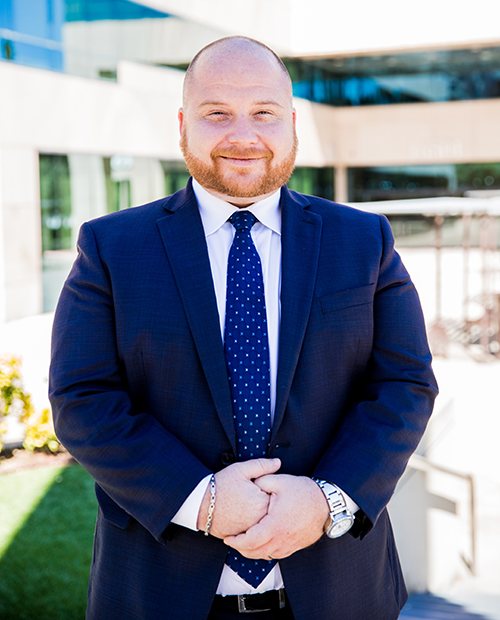
Attorney Erick Novik personally handles serious pedestrian injury cases and brings over a decade of trial experience to every claim. We are a contingency-fee firm. You pay nothing out of pocket. We advance all case costs and only get paid if we recover compensation for you.
Client Testimonials




100% FREE CONSULTATION
If you’ve been injured or lost a loved one due to another’s negligence, our team of experienced personal injury lawyers will fight to ensure you receive the compensation you deserve.
No cost consultation.
Please call us today and let us help you.
You don’t pay unless we win.
NOVIK LAW GROUP
A Professional Corporation
16830 Ventura Boulevard, Suite 401, Encino, CA 91436
Phone: (818) 305-6041
NOVIK LAW GROUP
A Professional Corporation
500 S. Sepulveda Blvd., Suite 523, Los Angeles, CA 90049
Phone: (213) 992-9233
NOVIK LAW GROUP
A Professional Corporation
7700 Irvine Center Dr., Suite 800, Irvine, CA 92618
Phone: (949) 800-5922
California pedestrian law is more protective of pedestrians than many people realize. Understanding the basic right-of-way rules is the foundation for every pedestrian accident claim.
California Vehicle Code §21950 requires every driver to yield the right-of-way to a pedestrian crossing the roadway within any marked crosswalk OR within any unmarked crosswalk at an intersection. The “unmarked crosswalk” rule is critical: most intersections in California have legal crosswalks even when no painted lines exist. Drivers who hit pedestrians at intersections frequently try to argue there was no crosswalk, but California law treats intersection corners as crosswalks by default.
California Vehicle Code §21456 governs pedestrian crossing signals. A pedestrian who enters the crosswalk on a “Walk” signal or during a flashing “Don’t Walk” countdown has the right of way to complete the crossing, even if the signal changes mid-crossing.
The Freedom to Walk Act (AB 2147), effective January 2023, decriminalized most California jaywalking. Pedestrians can now cross outside marked crosswalks without being cited as long as it is reasonably safe to do so. This change has substantial implications for pedestrian accident cases: insurance carriers can no longer reflexively blame pedestrian victims for crossing mid-block, and police are no longer issuing routine jaywalking citations that defendants used to weaponize against pedestrian claims.
California Vehicle Code §21952 requires drivers to yield to pedestrians on sidewalks when crossing into or out of driveways and alleys. This rule frequently applies in parking lot, driveway, and apartment complex accidents.
California’s comparative negligence rule means a pedestrian can still recover compensation even if found partially at fault. Recovery is reduced by the pedestrian’s percentage of fault but never barred entirely. A pedestrian who was 20 percent at fault for crossing outside a crosswalk can still recover 80 percent of their damages.
Most California pedestrian accidents fall into a small number of recurring fact patterns, each with distinct liability and evidence considerations:
Pedestrian accident cases often involve multiple liable parties beyond just the driver:
Identifying every liable party matters because it increases the available insurance coverage. A pedestrian struck by an underinsured driver in a poorly designed apartment complex parking lot may have access to the driver’s policy AND the property owner’s commercial liability coverage AND the property management company’s policy. Building the full liability picture is what produces full recovery in serious pedestrian injury cases.
California pedestrian accident victims can recover both economic damages (the measurable financial losses) and non-economic damages (the human cost of the injury). Recoverable damages typically include:
Pedestrian accident damages tend to be higher than typical car accident damages because the injuries tend to be more severe. Traumatic brain injuries, spinal cord injuries with paralysis, multiple fractures, internal organ damage, and amputations are common pedestrian accident outcomes. Cases involving these injuries routinely produce six-figure to seven-figure recoveries when properly developed.
If you have been struck by a vehicle while walking, the actions you take in the hours and days after the accident significantly affect your claim:

The questions below address issues specific to California pedestrian accident claims. For broader personal injury questions about damages, deadlines, and the claims process, see the FAQ section on our homepage. For questions about your specific situation, call Novik Law Group at (818) 305-6041 for a free, no-obligation consultation.
Under California Vehicle Code §21950, drivers must yield the right-of-way to pedestrians crossing the roadway within any marked crosswalk and within any unmarked crosswalk at an intersection. Most intersections in California have legal crosswalks at the corners even when no painted lines are visible. Drivers who hit pedestrians at intersections frequently try to argue there was no crosswalk, but California law treats intersection corners as crosswalks by default. The pedestrian has the right of way as soon as they step into the crosswalk, and drivers are required to slow down or stop to allow safe passage.
The Freedom to Walk Act (AB 2147), effective January 2023, decriminalized most California jaywalking. Pedestrians can now cross outside marked crosswalks without being cited as long as it is reasonably safe to do so. Even before this law change, California’s pure comparative negligence rule allowed jaywalking pedestrians to recover compensation, with their recovery reduced by their percentage of fault. A pedestrian who was 30 percent at fault for crossing mid-block can still recover 70 percent of their damages. Do not assume you have no case because you crossed outside a crosswalk. Many factors affect liability, including the driver’s speed, visibility, attention, and whether the driver took reasonable steps to avoid the collision.
Parking lot and garage pedestrian accidents often involve both driver liability AND premises liability against the property owner or operator. California property owners owe a duty of care to maintain reasonably safe parking areas, which can include adequate lighting, clear sight lines, speed bumps or other speed-control measures, marked pedestrian walkways, and warnings about known hazards. Apartment complexes, shopping centers, hospitals, restaurants, hotels, and commercial garages all carry these obligations. When the property’s design or maintenance contributed to the accident, the property owner’s commercial liability insurance becomes an additional source of recovery on top of the driver’s personal auto policy. These dual-liability cases often produce substantially higher recoveries than driver-only claims.
Hit-and-run pedestrian accidents are unfortunately common in California. Under California Vehicle Code §20001, leaving the scene of an accident involving injury is a felony, which triggers a criminal investigation that often produces useful evidence for the civil claim (traffic camera footage, eyewitness identification, recovered debris from the vehicle). If the driver is identified, the civil claim proceeds against their insurance. If the driver cannot be identified, your own Uninsured Motorist (UM) coverage typically becomes the primary path to recovery. UM coverage on your auto policy applies even when you were not in your vehicle, including when you were struck as a pedestrian. Many California drivers do not realize their auto policy’s UM coverage protects them in pedestrian accidents.
The value of a pedestrian accident case depends on the specific facts: severity and permanence of injuries, total medical costs (past and future), lost wages and reduced earning capacity, pain and suffering, available insurance coverage from all defendants, and the strength of the liability evidence. Pedestrian cases tend to produce higher recoveries than typical car accident cases because pedestrian injuries tend to be more severe (no airbags, no crumple zones, direct impact with the vehicle). Cases involving traumatic brain injuries, spinal cord injuries, multiple fractures, or wrongful death routinely produce six-figure to seven-figure recoveries when properly developed. Beware of websites or attorneys that quote a specific “average” without knowing your case facts. A free case evaluation provides a much more meaningful estimate.
Yes, in many cases. When a dangerous roadway condition contributed to the pedestrian accident, including poorly designed intersections, missing or faded crosswalks, inadequate lighting, defective signage, missing pedestrian signals, or obstructed sight lines, the government entity responsible for the roadway can be sued under California Government Code §835. Caltrans claims apply to state highways and certain freeway interchanges. City or county claims apply to local streets and intersections. These claims have strict procedural requirements: a notice of claim must be filed within six months of the accident under the California Government Claims Act. Missing this deadline typically bars the claim permanently. If your accident occurred at a location with prior pedestrian incidents or known design defects, the government claim is often a critical part of the case.
Rideshare and delivery driver pedestrian accidents involve distinct insurance coverage that depends on the driver’s app status at the moment of impact. Uber and Lyft both carry $1 million in third-party liability coverage when the driver is actively on a trip or has accepted a ride request. When the driver has the app on but has not accepted a ride, lower coverage limits apply. When the driver was not logged into the app, only their personal auto policy applies. Similar tiered coverage applies to DoorDash, Uber Eats, Amazon Flex, and other gig delivery work. Determining the driver’s app status at the moment of impact is critical evidence in these cases, and requires subpoenas to the rideshare or delivery company that should be issued quickly before records are routinely purged.
Pedestrian accidents produce some of the most severe injuries in personal injury practice, and they involve legal and insurance considerations most people are not familiar with. If you or a loved one has been struck by a vehicle anywhere in California, the most important step you can take is contacting an experienced California pedestrian accident attorney before talking to insurance adjusters or signing any documents. Novik Law Group has spent over 12 years handling complex pedestrian injury and wrongful death cases throughout California. Attorney Erick Novik personally handles serious pedestrian injury cases. Call us today at (818) 305-6041 for a free, no-obligation case evaluation. We work on contingency. You pay nothing unless we recover compensation for you.