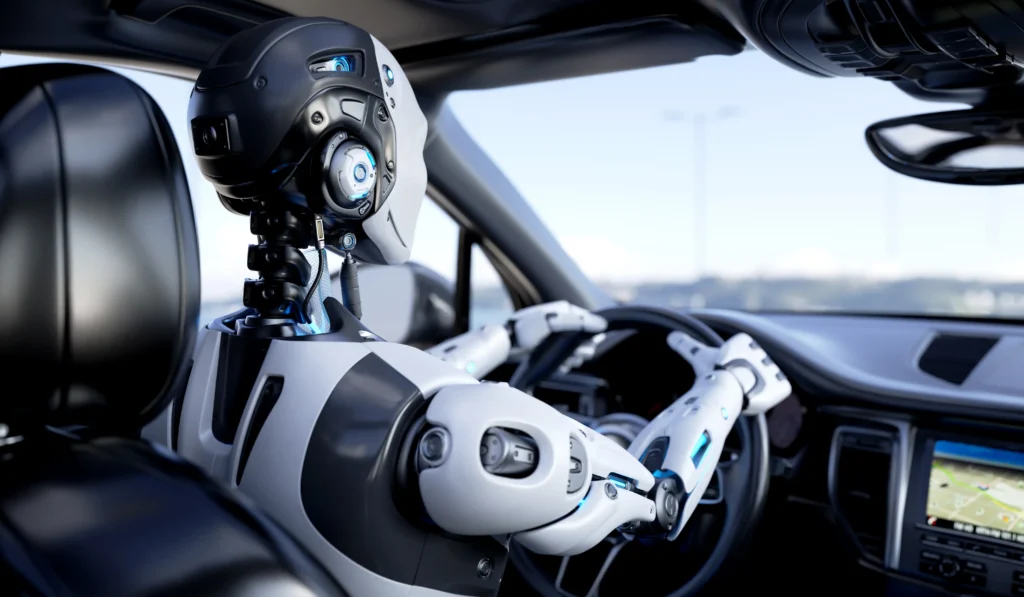
Injured in a self-driving car accident? We have recovered millions for our clients.
Free Consultation – No Recovery, No Fee!
$1,625,000
Trip & Fall
$1,610,000
Car Accident
$1,250,000
Bus Accident
$1,000,000
Trip & Fall
Autonomous vehicles are no longer a test program confined to a few city blocks. Waymo robotaxis carry paying passengers throughout California every day, Tesla’s driver-assist systems are active on freeways across the state, and more operators are seeking permits to join them. When one of these vehicles causes a crash, victims face a legal fight that looks nothing like a standard car accident case: identifying who is responsible often means investigating a manufacturer’s software instead of, or in addition to, a human driver.
Novik Law Group carries that burden for you. We know how to secure and interpret the sensor data, telemetry logs, and manufacturer records that decide these cases before insurance companies can bury them, and we build every case as though it is going to trial. We work on contingency and have a no win, no fee policy.
How Novik Law Group Can Help You
or Call (818) 305-6041 now!
Real People. Real Results.
We fight to get the best possible result for you.
$1,625,000
$1,610,000
$1,250,000
$1,225,000
Your Advocates For Justice
California has become the country’s busiest testing ground for autonomous vehicle technology. Waymo is now the dominant robotaxi operator in the state, running paid driverless rides throughout California with no human driver behind the wheel. Tesla’s Full Self-Driving system is active on California freeways and surface streets, and Zoox continues testing purpose-built driverless vehicles on public roads. Attorney Erick Novik personally handles these cases and brings over a decade of trial experience to claims that increasingly turn on software logs and sensor data instead of eyewitness accounts alone.
Autonomous vehicle accident law is still developing, and that makes experienced representation more important. A traditional car accident claim centers on driver negligence. An autonomous vehicle claim can also center on the vehicle itself: a defect in the sensors, a flaw in the software’s decision-making, or a hardware design failure. When a defect contributed to the crash, the manufacturer can be held liable in addition to, or instead of, a human driver. California’s DMV also requires permits and collision reporting for any company testing or deploying autonomous vehicles on public roads, and those regulatory filings can become evidence in a claim.
Client Testimonials
Our autonomous vehicle accident practice covers every category of self-driving and driver-assist crash. Each category has distinct evidence requirements, liability theories, and insurance considerations:
If your crash involves more than one of these categories, for example, a Tesla Full Self-Driving malfunction that triggers a multi-vehicle pileup, the case theory builds across all relevant angles. Identifying every applicable theory of liability is what increases available insurance coverage and produces full compensation.
The actions you take right after a crash involving a self-driving or autonomous vehicle significantly affect your claim, and the evidence in these cases can disappear faster than in a standard accident. The basic checklist:
What NOT to do: do not apologize at the scene, do not minimize your injuries to a police officer or insurance adjuster, and do not accept the first settlement offer without legal review, especially in a case where the responsible party may be a manufacturer rather than an individual driver.
NOVIK LAW GROUP
A Professional Corporation
16830 Ventura Boulevard, Suite 401, Encino, CA 91436
Phone: (818) 305-6041
NOVIK LAW GROUP
A Professional Corporation
500 S. Sepulveda Blvd., Suite 523, Los Angeles, CA 90049
Phone: (213) 992-9233
NOVIK LAW GROUP
A Professional Corporation
7700 Irvine Center Dr., Suite 800, Irvine, CA 92618
Phone: (949) 800-5922
California law includes several rules that directly shape what your case is worth and who can be held responsible when a self-driving vehicle causes a crash.
Product liability versus driver liability. A traditional car accident claim centers on driver negligence. An autonomous vehicle claim can also center on the vehicle itself: a defect in the sensors, the software’s decision-making, or the hardware design. When a defect contributed to the crash, the manufacturer can be held liable in addition to, or instead of, a human driver.
DMV testing and deployment rules. The California DMV requires a permit for any company testing or deploying autonomous vehicles on public roads, and operators must report certain collisions to state regulators. These regulatory filings can become important evidence in a claim.
Pure comparative negligence. Even if you bear some responsibility for what happened, California law still lets you recover compensation. The percentage of fault attributed to you comes off the top of your final award rather than eliminating your claim outright. Read more about how California’s pure comparative negligence law works.
Statute of limitations. California’s standard filing window for a personal injury lawsuit is two years from the date of the injury under California Code of Civil Procedure §335.1. That window compresses to as little as six months when a government entity may share liability. Autonomous vehicle evidence can disappear quickly, so early legal guidance matters.
Economic and non-economic damages. A California injury claim can include hard costs like medical bills and lost wages alongside harder-to-quantify losses like pain, suffering, and disruption to everyday life.
California has become the country’s busiest testing ground for autonomous vehicle technology, and the operators sharing the road with everyday drivers keep growing:
Regulatory oversight has already shown teeth here. One major operator lost its permit to run driverless vehicles in California after regulators found it withheld details about a crash, a reminder that these companies’ internal records face real scrutiny and can become evidence in a claim.
The questions below address issues specific to autonomous vehicle accident claims in California. For broader personal injury questions about damages, statute of limitations, costs, and the claims process generally, see the FAQ section on our homepage. For questions about your specific situation, contact Novik Law Group at (818) 305-6041 for a free, no-obligation consultation.
Liability depends on what caused the crash. If a human driver was supervising a driver-assist system and failed to intervene, liability may rest with that driver. If the vehicle was operating without human control, liability often shifts to the manufacturer or the company operating the fleet, such as Waymo. Many cases involve more than one liable party.
A California self-driving car accident lawyer investigates evidence a standard car accident attorney never has to touch: sensor logs, LIDAR and camera data, disengagement reports, and the manufacturer’s own internal records. These cases also require identifying whether liability falls on a human driver, a vehicle operator like Waymo, or the manufacturer itself, a three-way analysis that does not exist in a typical two-driver collision. Novik Law Group builds this evidence and liability picture from day one, before the responsible company can control the narrative around what its own vehicle did.

California law generally gives you two years from the date of the accident to file a personal injury lawsuit. If a government entity may share liability, that claim must typically be presented within six months. Autonomous vehicle evidence can disappear quickly, so early legal guidance matters.
Pedestrians struck by an autonomous vehicle can pursue a claim against the vehicle’s operator, the manufacturer, or both. Because there is no driver to question, these cases rely heavily on the vehicle’s own sensor and camera data to establish what happened.
Yes. The California DMV requires a permit for any company testing or deploying autonomous vehicles on public roads, and operators must report certain collisions to state regulators. These regulatory records can become important evidence in a claim.
In many cases, yes. If a defect in the vehicle’s hardware or software contributed to the crash, you may have a product liability claim against the manufacturer in addition to, or instead of, a standard negligence claim.
Sensor logs, LIDAR and camera data, disengagement reports, and the vehicle’s internal decision records are often the most important evidence in these cases. This data can be overwritten or deleted, so it needs to be preserved quickly through a formal legal request.
If you have been injured by a self-driving car, robotaxi, or autonomous vehicle anywhere in California, the most important step you can take is securing experienced legal representation before talking to insurance adjusters or signing any documents. Novik Law Group has spent over 12 years handling complex auto accident cases throughout California. Attorney Erick Novik personally handles serious injury cases. Call us today at (818) 305-6041 for a free, no-obligation case evaluation. We work on contingency. You pay nothing unless we recover compensation for you.