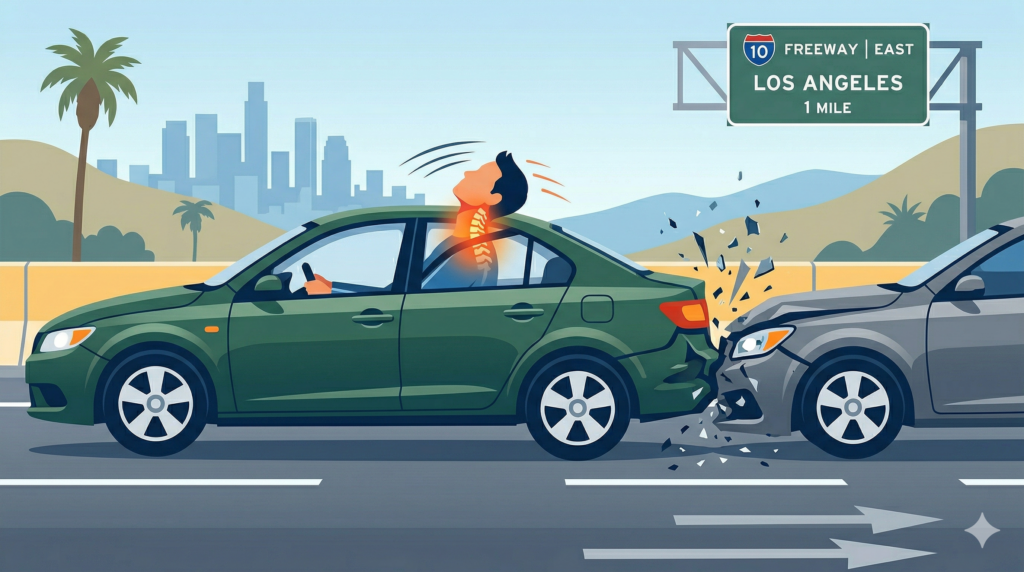
If you have recently been rear-ended on an LA freeway, you might be experiencing a stiff neck, radiating pain, and severe headaches.
Erick is extremely passionate about issues involving injustices where there is an apparent imbalance of power. Whether the imbalance involves a large corporation or a government entity that denies responsibility and minimizes the harm they have inflicted on his clients, Erick prides himself in helping victims obtain full and complete compensation.

You are likely wondering: what is whiplash in a car accident, and what are my legal rights? Whiplash is one of the most common—yet most misunderstood—injuries sustained in traffic collisions. Because it affects soft tissues rather than bones, insurance companies often try to downplay its severity. However, for the victim, the pain is very real and can completely disrupt daily life. Here is everything you need to know about how whiplash happens, how long it lasts, and how to protect your right to compensation.
Whiplash is an injury to the soft tissue in the neck and upper shoulders, including the muscles, tendons, and ligaments. Soft tissue is what holds the body together, connecting bones and nerves so that a person can move comfortably.
Whiplash refers to a specific injury that happens when a person’s head and neck rapidly move back and forth, similar to the forceful crack of a whip. This sudden, violent movement can stretch or tear the soft tissue in the neck, causing tremendous pain and restricted mobility.
While there are several causes, the most common culprit is a rear-end collision between two vehicles. As the rear vehicle slams into the back of the front one, the driver and passengers in the front vehicle typically have their heads snap aggressively forward and back.
Note: Whiplash can also occur in contact sports (like football), during physical violence or abuse (such as shaking), or from a sudden slip and fall.
Yes. This is a common misconception. You do not need to be involved in a high-speed freeway crash to suffer severe soft tissue damage. Even in a low-speed “fender bender” at 5 to 10 miles per hour, the sudden transfer of energy can forcefully jerk your head and neck, resulting in a painful whiplash injury. Never brush off neck pain just because the visible damage to your car is minor.
If you suspect you have suffered whiplash, the steps you take immediately following the crash are critical for both your physical health and your future legal claim:
Seek Immediate Medical Attention: Adrenaline can mask the pain of soft tissue injuries for hours or even days. See a doctor as soon as possible, even if you feel “fine” at the scene. This creates an official medical record tying your injury directly to the accident.
Follow Your Doctor’s Orders: Attend all follow-up appointments, go to physical therapy, and take prescribed medications. Gaps in your treatment give insurance companies an excuse to deny your claim.
Document Everything: Keep a journal of your pain levels, missed days of work, and how the injury affects your daily life. Save all medical bills and receipts.
Consult a Personal Injury Attorney: Before giving a recorded statement to the other driver’s insurance company or accepting a fast settlement, speak with a lawyer to understand the true value of your case.
The recovery timeline depends entirely on the severity of the soft tissue damage:
Minor Whiplash: Fortunately, minor whiplash requires minimal treatment and usually heals within a few weeks. Recovery generally involves rest, following a doctor’s orders, and taking over-the-counter painkillers.
Severe Whiplash: Serious whiplash injuries can take months or even years to recover from. During this time, the victim can be in absolute anguish, unable to sleep or go to work. Long-term recovery often involves heavy prescription painkillers, extensive physical therapy, and ongoing chiropractic care.
Yes. If your whiplash was caused by someone else’s negligence, you have the right to hold them legally and financially accountable. For example, in a rear-end collision, the driver in the rear car is almost always at fault. California law expects drivers to leave enough space between their vehicle and the vehicle in front of them to stop safely—even if the front driver stops suddenly. Contact the Los Angeles whiplash lawyers at Novik Law group today to see if you have a case.
Filing a successful whiplash claim involves proving that the other party was negligent, proving the extent of your injuries, and demanding appropriate compensation. Because soft tissue injuries don’t easily show up on X-rays, insurance adjusters fight these claims aggressively.
To claim maximum compensation, you should work with a dedicated personal injury attorney who will:
Gather police reports, witness statements, and dashcam footage to prove liability.
Work with medical specialists to accurately diagnose and document your soft tissue damage.
Calculate your total damages, including past and future medical bills, lost wages, and pain and suffering.
Negotiate fiercely with the insurance company and take your case to trial if they refuse to offer a fair settlement.
If you’ve been injured or lost a loved one due to another’s negligence, our team of experienced whiplash injury attorneys in Los Angeles will fight to ensure you receive the compensation you deserve.
No cost consultation.
Please call us today and let us help you.
You don’t pay unless we win.